Author
Podcaster
TV Host
Brooklynite

My broadcast career has spanned major networks and cable outlets both as a host and contributor: I hosted The Cycle on MSNBC, Hip Hop Shop on Fuse, the Black Carpet on BET, I’ll Try Anything Once on Treasure HD, and Spoke N Heard on MTV. I was also the first Pop Culture correspondent on CNN.
A respected voice in the community, I consistently lend it to amplify causes for social justice and political awareness.
I write because it’s the most natural thing in the world to me. I write because I love making sentences. I write because I live to talk about the world in ways that could challenge how people think. I write because I love talking about Black people and Black culture and the beauty of Blackness.
I’ve published six books including I Would Die 4 U: Why Prince Became An Icon and Who’s Afraid of Post-Blackness: A Look At What It Means To Be Black Now. I host the podcast Toure Show — guests have included Zadie Smith, Malcolm Gladwell, Ice Cube, Spike Lee, Kareem Abdul-Jabbar, Nikki Giovanni, Toni Braxton, Taraji P. Henson, and many others. I love using media to help challenge people’s perception of themselves and of the world.

I Would Die 4 U
Why Prince Became an Icon
Drawing on new research and enlivened by Touré's unique pop-cultural fluency, I Would Die 4 U relies on surprising and in-depth interviews with Prince's band members, former girlfriends, musicologists, and even Bible scholars to deconstruct the artist's life and work.
Order Book
Who's Afraid of Post Blackness?
What it Means to be Black Now
In this provocative book, writer and cultural critic Touré explores the concept of Post-Blackness: the ability for someone to be rooted in but not restricted by their race. Drawing on his own experiences and those of 105 luminaries, he argues that racial identity should be understood as fluid, complex, and self-determined.
Order BookI love to talk about culture, politics, and the direction this country is going. I care deeply about America, pop culture, and my family—I have a wife, a son, and a daughter. I started out writing about music for Rolling Stone, as a Contributing Editor I did cover stories on Jay-Z, Beyonce, Lauryn Hill, Snoop Dogg, the Migos, Adele, and many others. I segued into TV as a pop culture correspondent for CNN, then hosted shows for MTV2, BET, and Fuse, then became the host of The Cycle on MSNBC.
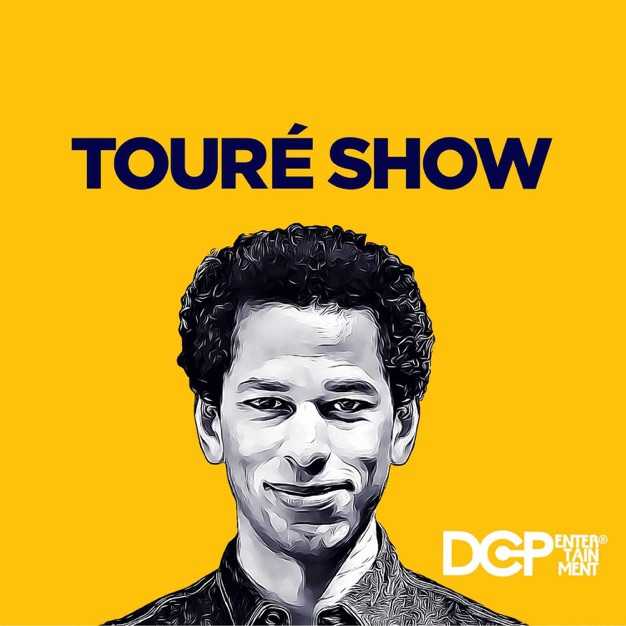
Toure Show
Toure Show is a one on one conversation with successful, inspiring Black people. Musicians, artists, intellectuals, writers, politicians, comedians, athletes—all sorts of awesome people who are making the world a more interesting place. Guests have included Zadie Smith, Malcolm Gladwell, Spike Lee, Nikki Giovanni, Michael Eric Dyson, Nikole Hannah Jones, the Central Park 5, Ice Cube and many more.
Listen to PodcastLet's Work Together
Writing, Speaking, Hosting
I would really like to hear from you! I am available to talk at your next event. The fastest way to contact me is by email. I receive many messages per day, so be patient, I will get back to you as soon as I can.
Contact Me